 Contact Support
 Sign In


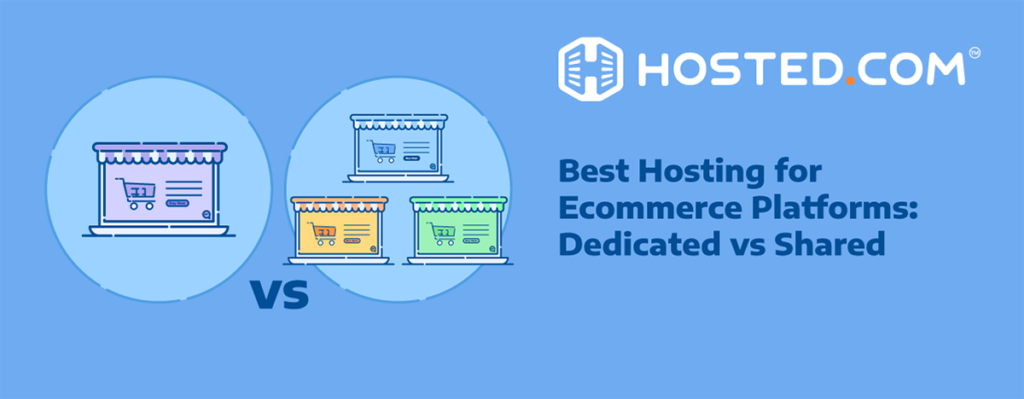
When looking for the best hosting for ecommerce, the type of service plays a central role in your site’s speed, security, scalability, and user experience. You may find yourself weighing the benefits of dedicated versus shared hosting solutions. Selecting the right hosting environment has become increasingly important for businesses of all sizes. This article will explain the differences between dedicated and shared WordPress Hosting, their unique features, pros and cons, and suitability for online stores. We’ll also look at how they can help you comply with data protection regulations, and which is the best choice for you, depending on your budget and ecommerce needs.
KEY TAKEAWAYS
- Ecommerce hosting is tailored for online stores, offering features for enhanced security, performance, and customer experience that set it apart from standard web hosting.
- In shared hosting resources are split between multiple sites on a single server. It can be cost-effective for small ecommerce sites with lower traffic, but it comes with limitations in performance, security, and customization.
- Dedicated hosting provides an entire server for a single website. It offers superior performance, security, and customization options for larger ecommerce sites with high traffic and specific requirements.
- Overall, dedicated hosting offers better performance, but shared hosting can give enough performance for small ecommerce sites.
- While both options can be secure, dedicated hosting provides more security features and an isolated environment for ecommerce sites handling sensitive data.
- Shared hosting may require upgrades or migration to higher-tier plans, while dedicated hosting offers greater scalability and flexibility for ecommerce businesses.
- The choice between dedicated and shared hosting depends on various factors unique to each ecommerce business, including budget, traffic, security, and technical knowledge.
Table of Contents
Understanding Ecommerce Hosting
WordPress ecommerce hosting is a specialized hosting service designed to support online stores built on the WordPress platform, often with WooCommerce integration. This type of hosting is designed to handle the unique demands of ecommerce websites, including keeping transactions secure, optimized content and page navigation, stability, and consistent performance.
Ecommerce hosting generally includes several essential features for an improved user experience including:
- SSL certificates, firewalls, and regular security updates to protect sensitive customer and financial data.
- Payment gateway integration to facilitate smooth transactions.
- Database management for handling and retrieving product descriptions, customer information, order details, etc.
- Scalable resources to handle traffic spikes during sales or promotions.
- Regular automated backups and recovery systems to protect business and website data.
- Content Delivery Network (CDN) integration for faster loading times across different geographical locations.

WordPress Ecommerce Hosting vs. Standard Web Hosting
While regular web hosting can support basic ecommerce websites, the best hosting for ecommerce is specifically designed for online stores. In addition to the features above, here are some of the main differences:
Compared to standard web hosting, WordPress servers are designed to handle heavy traffic and resource-heavy tasks such as dynamic content, database queries, shopping carts, and payment processing without any slowdowns or breaks in site functionality. It often includes one-click installers for popular shopping platforms like WooCommerce and pre-configured settings.
Ecommerce hosts also have support teams more experienced with the WordPress platform and ecommerce add-ons as well as hosting-related issues.
Probably the biggest difference is the impact on an online store’s performance. Optimized servers and caching mechanisms can dramatically improve loading times compared to standard hosting. Ecommerce hosts often guarantee much higher uptime percentages, ensuring your store is always accessible.
WooCommerce speed optimization for example is increased with efficient database management and server configurations leading to faster checkouts and payment processing. Your Search Engine Optimization (SEO) can benefit because faster, more reliable sites tend to rank better in search results.
Shared Hosting for Ecommerce
Often a popular option for many small ecommerce businesses, shared hosting is a service where multiple sites are hosted on a single web server. Each one shares the server resources such as CPU, RAM, and disk space. In this model, each website has its own space on the server, but the overall resources are distributed among all hosted sites.
Shared hosting providers typically offer user-friendly control panels, making it easier for businesses, even those with limited technical expertise, to manage their websites. For new or small ecommerce sites with modest traffic, shared hosting can provide adequate performance.
However, it’s not without its drawbacks. Shared hosting can lead to performance issues, particularly if one of the websites on your server sees a sudden spike in traffic which can slow down your site, increasing bounce rates and abandoned carts.
Pros
- Cost-Effective: Shared hosting is typically the most affordable option, making it attractive for startups and small businesses.
- Easy to Manage: Most shared hosting providers offer user-friendly control panels and one-click installers for popular ecommerce platforms.
- Basic Support: Providers usually handle server maintenance, updates, and basic security, reducing the workload for site owners.
- Scalability: Many hosts offer tiered plans, allowing businesses to upgrade as they grow without immediately jumping to dedicated hosting.
Cons
- Limited Resources: Your site shares server resources with others, which can lead to slower performance during traffic spikes.
- Less Secure: While hosts implement security, the shared environment can potentially expose your site to vulnerabilities and malware from neighboring sites.
- Reduced Customization: Shared hosting often restricts the level of server customization available, which may limit advanced ecommerce functionality.
- Inconsistent Performance: Your site’s performance can be affected by the resource usage of other sites on the same server.
- Potential SEO impact: If other sites on the shared server take up too many resources, use harmful spammy practices, or infect your site with viruses it could potentially affect your search engine visibility.
Shared hosting is best suited for new ecommerce businesses that can benefit from the low cost and ease of use while they launch their websites. Similarly, businesses prioritizing cost savings over maximum performance may find shared hosting adequate for their needs. Sites with a limited number of products and low traffic can often perform well enough on shared hosting.
Dedicated Hosting for Ecommerce
Dedicated hosting offers a powerful solution for ecommerce businesses that require high performance, enhanced security, and complete control over their hosting environment.
Using this service provides an entire physical server exclusively for your ecommerce website. This means all the server’s resources, including CPU, RAM, storage, and bandwidth, are dedicated solely to your online store, ensuring maximum performance and flexibility.
The increased control over server resources, coupled with the ability to customize the server to meet specific business requirements, often makes it the preferred choice for many larger ecommerce businesses.
However, dedicated hosting also has drawbacks. The primary disadvantage is the cost involved. As you have an entire server dedicated to your business, the expenses are significantly higher than shared hosting. Additionally, the management and maintenance of the server require advanced technical expertise, adding to the operational complexity.
Pros
- Maximum Performance: With all server resources available all the time, your ecommerce site can handle high traffic volumes and complex transactions more efficiently.
- Enhanced Security: The isolated environment reduces risks associated with shared hosting, offering better protection for sensitive customer data.
- Full Customization: You have complete control over server configuration, allowing you to optimize it specifically for your ecommerce platform and unique needs.
- Reliable Uptime: Dedicated servers typically offer better uptime guarantees, crucial for maintaining the constant availability of your online store.
- Scalability: You can easily upgrade hardware or resources without affecting other users, allowing your store to grow alongside your business.
- Compliance: Dedicated hosting makes it easier to meet ecommerce compliance requirements, such as PCI DSS and GDPR.
Cons
- Higher Cost: Dedicated hosting is significantly more expensive than shared hosting options.
- Technical Expertise: Managing a dedicated server often requires advanced technical knowledge or the need to hire IT professionals.
- Maintenance Responsibility: You’re typically responsible for server maintenance, updates, and security patches.
- Potential Underutilization: If your traffic is inconsistent, you might not always use the full capacity of your dedicated server.
- Longer Setup: Configuring a dedicated server for your specific platform and performance needs can be time-consuming initially.
Dedicated hosting is best suited for high-traffic ecommerce sites that receive thousands of daily visitors and process numerous transactions simultaneously. This includes large-scale online businesses with extensive product catalogs and complex database requirements.
Additionally, companies in industries with specific ecommerce compliance and hosting requirements and strict data protection regulations for handling sensitive customer information will most likely use dedicated hosting.
While it comes with a higher price tag and increased management responsibilities, the benefits in terms of performance, security, and control make it an attractive option for enterprise-level businesses looking to provide the best possible user experience for their customers.

Performance Comparison: Shared vs. Dedicated
When choosing between shared and dedicated hosting for your ecommerce site, it is important to understand the differences in performance of both options. Here is how they compare across site performance metrics.
Shared
Shared hosting is generally slower due to shared resources with typical page load times of 2-5 seconds under normal conditions. Page load times can vary depending on the activity of other sites on the server this means your site can experience slowdowns during high-traffic periods.
Since resources including bandwidth are shared, there is potential for throttling during peak times. There is usually a limited ability to optimize server settings, caching, and installing performance-enhancing software.
Shared hosting providers generally offer an uptime guarantee of 99.9%. However, reliability can suffer. As mentioned earlier, your site can be more susceptible to downtime due to issues with other sites on the server. It may also experience slower recovery times after server issues.
Additionally, performance can vary based on several factors, including server load, the number of websites sharing the server, and your hosting provider’s specific infrastructure.
Dedicated
Dedicated hosting is significantly faster with average page load times of 0.5-2 seconds due to your site being the only one using the server’s resources. It also maintains consistent performance regardless of other websites’ activities like shared hosting, as there is no competition for resources, and can handle traffic spikes more efficiently.
Full control over server optimization means the ability to install and configure performance-enhancing software as well as implement advanced caching mechanisms tailored to your ecommerce platform
The flexibility to optimize performance for faster loading times in dedicated hosting can lead to better user experience, lower bounce rates, and potentially higher conversion rates.
With dedicated hosting you usually get an uptime guarantee of 99.99% or higher which can equate to less than 1 hour of downtime per year. The server offers higher reliability due to an isolated environment for your site with faster recovery times and more immediate support for server issues.
Security Features
Website security is a high priority due to dealing with sensitive personal and financial information. While both dedicated and shared hosting can protect your website from ecommerce security threats, they offer different levels of safety.
Anti-Malware
Shared hosting usually has basic malware scanning, but limited customization options. Malware scans can impact performance for all users, and removal might be delayed due to the shared server environment.
Dedicated hosting offers advanced, customizable protection, allowing the installation of your preferred anti-malware software. Scans can be scheduled without affecting performance, and removing infections can be done quickly.
SSL Certificates and Firewalls
Most shared hosting plans often include a basic SSL certificate but they may have limitations on customization and upgrades. Firewalls protect multiple sites on the server, but setting custom firewall rules might be limited.
With dedicated hosting, you have the option for high-level SSL certificates for ecommerce like Extended Validation (EV), advanced firewalls, and full control over rule settings. This also allows you to implement additional security features like intrusion detection systems.
Neighbor Site Risks
The “bad neighbor” effect in shared hosting can pose risks, as a compromised neighboring site could potentially affect your site while shared IP addresses can also impact your site’s SEO. If a security breach occurs, it can compromise multiple websites on a shared server, particularly if the attack targets a less secure site.
On the other hand, dedicated hosting gives complete isolation from other websites, eliminating the risk of issues from neighboring sites.
Choosing The Best Hosting for Ecommerce
Selecting the best hosting for ecommerce involves several factors. It’s essential to analyze your specific business needs and decide accordingly. If you’re just starting and have a tight budget, shared hosting might be a good starting point for low-traffic sites. If you aren’t familiar with server maintenance, it is generally easier to manage and often comes with more support from the provider.
But if you’re dealing with high traffic volumes and need enhanced security, dedicated hosting may be worth the investment. While more expensive, it can offer better value for larger, complex sites that can justify the cost through improved performance and security. Keep in mind that dedicated hosting requires more technical knowledge but offers greater control and customization.
Scalability and Growth
As your ecommerce business evolves, your hosting solution must be able to accommodate your site’s growth. Shared and dedicated hosting give different approaches to scaling and growth potential. Shared hosting generally provides limited scalability options, often requiring a move to a new plan, hosting type, or provider to upgrade and increase resources with the risk of extended downtime.
In contrast, dedicated hosting is highly scalable, offering options to upgrade CPU, RAM, and storage, often without downtime, and with customizable options for specific needs. It provides room for expansion without platform changes and allows for adding advanced features and extended functionality.

FAQs
What’s the difference between shared and dedicated hosting for ecommerce?
Shared hosting means multiple websites share server resources, while dedicated hosting provides an entire server exclusively for your ecommerce site.
How does hosting affect site speed?
Dedicated hosting provides faster site speeds due to exclusive server resources, while sites using shared hosting may experience slowdowns during peak times.
Is shared hosting good for ecommerce?
Shared hosting can be good for small ecommerce sites, especially those on a budget. However, as your site grows and traffic increases, you may need to upgrade to a more powerful hosting solution.
Can I upgrade from shared hosting as my business grows?
Yes, most hosts offer upgrades from basic hosting shared to higher-tier plans and types to accommodate business growth.
Is dedicated hosting more expensive than shared hosting?
Yes, dedicated hosting is much more expensive than shared hosting due to the exclusive use of an entire server and its resources.
Other Blogs of Interest:
– Analyzing WordPress Site Speed and Performance Metrics
– WooCommerce Integration With WordPress Hosting
– Integrating CDN for Ecommerce Global Reach
– Managed Ecommerce Hosting for Businesses With WordPress Sites
– Ecommerce Security Threats and WordPress Hosting Solutions
- About the Author
- Latest Posts

Wayne Diamond, the founder and CEO of Hosted.com, has over 20 years of expertise in the domain name and website hosting industry.
Under his leadership, Hosted.com will work towards transforming the way SMEs, entrepreneurs, freelancers, and established enterprises of all sizes manage their domain names, website and WordPress hosting, and online presence.