


 Contact Support
 Sign In

If you’ve ever thought about sharing money tips or guiding others with smart money habits, one of the best ways to do this is to start a finance blog. A blog gives you the space to talk about budgeting, saving, investing, and debt management in a way that connects with people who are looking for real answers.
The best part is, while you help others, you’re also building something valuable for yourself. When you build a website for your blog, you’re creating a platform that can grow into a trusted resource and even a steady source of income.
Blogging isn’t just about writing for fun. It brings real growth. According to Master Blogging, businesses with active blogs attract 67% more leads and 55% more traffic than those without one. This proves that when you start a finance blog, you’re not only teaching people, you are also opening the door to growth and new opportunities.
This guide teaches you how to take your first steps into blogging with confidence. We’ll discuss how to choose your niche, setup your blog, create enjoyable posts, and share them so they reach the right audience.
KEY TAKEAWAYS
- Pick a clear finance niche that matches your skills and interests, so readers know what to expect.
- Use keyword research to confirm people are searching for the topics you want to write about.
- Choose a secure, reliable blog platform with hosting, SEO tools, and an easy editor.
- Brainstorm a short, simple blog name, then match it with an available domain.
- Plan a content calendar and start with helpful posts on common finance topics.
- Write in a clear structure with headings, short paragraphs, and accurate information.
- Always proofread, fact-check, add image alt text, and link to related posts before publishing.
- Share your content through SEO, social media, and email updates to grow your reach.
- Monetize with affiliate links, ads, sponsored posts, digital products, or services, but be transparent with readers.
- Build trust by being open about who you are, using reliable sources, and adding disclaimers when necessary.
- Grow your blog by refreshing old posts, offering free lead magnets, checking analytics, and collaborating with others.
TABLE OF CONTENTS
Finance Blog Types
Before you start a finance blog, it’s helpful to decide which niche your blog will cover. This makes your blog more targeted and useful for readers. Here are the most common finance blog niches and who they serve:
- Personal Finance: Focuses on budgeting, saving, and paying off debt. Best for everyday earners.
- Investing: Covers stocks, Exchange-Traded Funds (ETFs), and market updates. Good for beginners and hobby investors.
- Small Business Finance: Explains cash flow, loans, and financial planning. Made for solo founders and small teams.
- Retirement Planning: Shares tips on pensions and retirement savings. Helpful for future planners.
- Fintech & Crypto: Explores digital banking, cryptocurrency, and blockchain. Suited for tech-curious readers.
- Financial Independence, Retire Early (FIRE): Discusses early retirement and passive income. Designed for goal-driven savers.
- Family Finance: Provides guidance on managing family budgets and planning for school. Helpful for parents and caregivers.
- Credit & Debt: Teaches about credit scores, credit cards, and debt control. Great for readers fixing their credit.
- Taxes: Offers filing tips and deductions. Best for professionals and informed filers.
- Real Estate: Deals with property investing and mortgages. Ideal for buyers and investors.
- Frugal Living: All about coupons and low-cost living. Perfect for budget-focused readers.
- Money Mindset: Considers habits, behavior, and financial attitudes. Great for readers interested in personal growth.
When you narrow your niche, you’re giving your blog a clear purpose. This not only makes writing easier; it also helps you reach readers who are eager for the exact advice you’re offering.
How to Start a Personal Finance Blog
When you start a finance blog, it may feel overwhelming at first, but breaking it into clear steps makes the process easier. In this section, we discuss the six main steps you need to take to bring your blog idea to life. You’ll see how to pick the right niche, setup your blog platform, choose a domain, and start writing posts that readers will value.
We also cover how to share your content so more people can find it and how to turn your blog into a source of income once you’ve built an audience. By the end, you’ll have a complete roadmap that takes you from planning to publishing and growing a finance blog that works.
Step 1: Choose Your Finance Blog Niche
We have explained various finance blog topics (niches); now it’s time to select one that guides the kind of content you will create. Without it, your blog can feel random, and readers may misunderstand what your site is about.
Here’s how you can choose your niche:
First, consider your skills and interests. If you’re good at budgeting and love helping others save money, personal finance might be a perfect fit.
If you follow market news and enjoy learning about stocks, investing could be your direction. Ensure you choose something you care about, as this will make it easier to stay consistent in the long run.
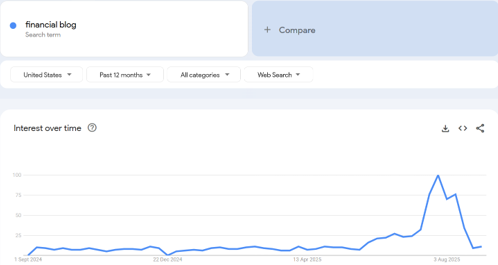
Next, ensure there’s real demand for your chosen niche. Use Google Trends or keyword research tools (e.g., Ahrefs) to see what people are searching for or explore common questions in forums and communities. This step helps you confirm that readers are searching for the advice you plan to share.
Keyword research is also essential for real outcomes. According to Nonofo Joel from Global Tech Stackon January 31, 2025, 37% of bloggers who conduct keyword research report strong results, compared to only 11% of those who never do keyword research, making success more than 3 times as likely when keywords are properly researched.
It’s also a good idea to look at existing finance blogs. Study their topics and style, then notice where they might be missing something. If you can fill those gaps with your own unique take, your blog will stand out more easily.
Lastly, consider your long-term goals. Ask yourself if this is a topic you’d still enjoy writing about a year or two from now. If YES, you’ve found your niche.
Step 2: Select a Blog Platform
Once you’ve chosen your niche, the next step when you start a finance blog is to decide where you’ll build your blog. This choice is important because the platform you use will show how easy it is to setup, manage, and grow your site.
A good blog platform should include must-have features that make your work simple and secure. Look for a Website Builder with built-in hosting, so your site is always online, and solid security, since you’ll be dealing with sensitive money topics.

However, if you have some knowledge about content management systems and prefer using one to start a finance blog, we recommend using WordPress, which supports 43.4% of all websites.

Now, if you use our builder, you’ll have an easy-to-use editor that lets you write and format posts without stress. On top of that, we provide 200+ clean mobile-friendly templates and basic SEO tools to help your blog rank in search results.

You also enjoy great extras that can make your blog look more professional. Options like custom design controls, built-in analytics, and an extensive template library will give you more freedom to shape your blog the way you want. These aren’t always required, but they do help if you wish to stand out and build a stronger brand.
Expert Tip: When you’re starting a finance blog, don’t overlook security and hosting. Readers need to trust your site before they will take your advice. A platform with strong web hosting and safety features protects you and your audience, which is especially vital in the financial arena.
Step 3: Choose Your Blog Name and Domain
The next step is to give your finance blog a name. This part is important because your blog name and domain are the first things readers will see, and they will shape how people remember you.
Here’s how to choose:
Start by brainstorming names that use keywords related to your niche. For example, if your blog is about budgeting, words like “save”, “budget”, or “money” might be part of your ideas. Write down a list of possible names until you find a few that feel clear and unique.
When choosing a name, keep it short and simple. Long or hard-to-spell names can confuse readers and make it harder for them to find you again. A short, simple name is much easier to share, and it sticks better in people’s minds.
Next, check if the domain for your chosen name is available. To do this, use Hosted.com®’s Domain Search Tool to see if the name you want can be registered. If the exact match isn’t available, try adding simple words that keep it relevant. You can also look at blog-friendly extensions like .com, .net, or .blog.

It’s best if your blog name and domain match. When both are the same, readers can recall your site easily, which strengthens your brand identity.
Expert Tip: Short, memorable names leave a stronger impression and make it easier for readers to return to your blog.
Step 4: Create and Publish Your Posts
Once your blog name and domain are ready, it’s time to start creating content. Writing posts is where your finance blog truly comes to life, and planning will help you stay consistent.
Begin by setting up a content calendar. This is simply a plan that maps out what you’ll write and when you’ll publish it. Include evergreen posts, which are topics that remain useful over time, such as budgeting or saving tips, and combine with timely updates like tax deadlines or new money trends. A calendar organizes your content and ensures your blog is constantly fresh.
When you start a finance blog, focus on key topics that readers search for. These include:
- Budgeting basics.
- Debt payoff strategies.
- Beginner investing guides.
- Tax tips.
- Retirement planning.
These subjects provide a strong foundation for your blog and attract readers wanting clear, practical advice.
Each post should follow a simple structure. Begin with an introduction that explains what readers will learn, then use headings and short paragraphs to break down your points. This makes your content easier to scan and understand.
Before hitting Publish, go through a quick checklist. Proofread your writing, double-check facts, and add alt text for images. Don’t forget to link to other posts on your blog, since internal links improve SEO and help readers explore more of your content.
To get started faster, create a small bank of your first 10 post ideas. This could include topics like:
- 5 Easy Ways to Start Budgeting Today.
- Beginner’s Guide to Paying Off Debt.
- How to Start Investing with $100.
- Tax Tips Everyone Should Know.
- Simple Retirement Planning for Beginners.
Having these ideas ready ensures you don’t run out of topics. And remember, blogging doesn’t end once a post is published. According to Naveen Kumar from DemandSage on June 26, 2025, updating older posts can boost results by up to 270%, so revisit and refresh your content regularly.
Step 5: Promote Your Blog
When you start a finance blog, publishing posts is only the beginning. To acquire readers and grow your finance advice blog, you’ll need to promote your content so people can find it. This is where promotion comes in. It doesn’t have to be complex; instead, it’s about using the right methods consistently.
Here’s how to promote your blog after you start a finance blog:
- Start with SEO basics.
- Add helpful keywords to your blog titles, headings, and meta descriptions so search engines know what your post is about.
- Don’t forget your images; adding descriptive alt text makes them easier to find and improves accessibility.
Next, share your posts on social media channels where your audience spends time. If your blog focuses on family finance, you might reach parents on Facebook. If it’s about investing, LinkedIn or Twittercould work better. The key is to post regularly and provide readers with a reason to click.
Building an email list is another smart step. Even a simple signup form allows you to collect email addresses from readers who want updates. Sending out short, helpful emails keeps your audience engaged and ensures they return to your blog.
You can also promote within your own blog. Cross-link related posts so readers can move from one article to another. This keeps them on your site longer and shows search engines that your content is connected.
Finally, consider writing guest posts for blogs with a similar audience. It’s a proven way to reach new readers and build your authority in the finance space.
Step 6: Monetize Your Blog
Once your finance blog has useful content and steady visitors, you can start earning from it. There are several monetization paths to explore, and choosing the right mix will help you build a reliable income over time.
One of the most common methods is affiliate marketing. This means you recommend products or services through special links, and when someone makes a purchase, you earn a commission. Many finance bloggers also use display ads, which place banner ads on your site and pay you based on views or clicks.
Another option is sponsored posts, where brands pay you to write about their services. As your blog grows, you can also create and sell digital products, such as eBooks, budgeting templates, or online courses. Offering your own services, such as financial coaching or consulting, can add a second income stream.
When monetizing, always be clear and fair with your readers. Add disclosures when using affiliate links or sponsored content and only recommend tools and products you trust. This builds credibility and keeps your audience’s confidence.
It’s also smart to diversify. It’s not a good idea to rely on a single source of income, since online earnings can change quickly. Combining a few strategies will keep your revenue steady.
And remember, making money from blogging takes time. Be patient, keep publishing, and focus on helping readers first. The income will follow as your blog grows.
Starting a finance blog is easier than you think when you have the right tools. With Hosted.com®’s fast Web Hosting, secure backups, SEO tools, and easy Website Builder, you can launch your blog in just a few steps and focus on sharing your financial expertise.
Why Start a Finance Blog?
Here are the key reasons to start a financial advice blog:
- Help People with Real Money Problems: Money is one of the biggest challenges people face. Many have problems with budgeting, debt, saving, or investing, and they’re always searching for answers. A finance blog provides practical solutions that improve people’s lives. When readers find advice that works, they’ll keep coming back for more.
- Build Your Brand & Credibility: Sharing helpful posts regularly builds trust. Over time, readers see you as a reliable voice in the finance space. This credibility strengthens your personal brand and can open doors to new opportunities, such as guest writing, interviews, or even speaking at events.
- Learn Faster by Teaching: Writing about finance doesn’t just help your readers; it assists you, too. When you explain a topic in simple terms, you deepen your own understanding. Teaching forces you to research carefully, which improves your knowledge and confidence.
- Open Doors to Income: A finance blog can expand into a business. You can monetize through affiliate links, display ads, sponsored posts, or even by creating your own digital products. Each of these paths gives you a way to earn while combining them helps you build a stable income.
- Create New Opportunities: Blogging often leads to unexpected chances for growth. Partnerships with brands, collaborations with other creators, or even consulting opportunities can come your way. Your blog becomes more than a website; it becomes a platform that connects you to bigger opportunities.
- Reach a Wide Audience: The internet lets you reach readers across the globe. Whether you’re helping a college student with budgeting or guiding someone toward retirement planning, your blog can speak to thousands of people who need practical financial advice.
Tips to Build Trust with Your Audience
For a finance blog to succeed, readers need to believe in what you share. Here, trust is the foundation that keeps people returning and recommending your blog to others. Building it takes consistency, honesty, and a few smart steps.
Start by being open about who you are. Create a clear About page that tells readers your background and why you’re writing about money. You don’t need to be a financial expert with certifications; however, being honest about your experience is enough to make people feel connected.
When writing posts, clarify whether you’re sharing a personal story or giving general advice. For example, if you write about how you paid off debt, explain that it was your own journey. This way, readers know when you’re sharing an experience and when you’re offering broader tips.
Always rely on trusted sources and double-check your facts. Finance is a serious topic, and readers will only take your advice if it’s accurate. Linking to reliable data or expert studies shows that you’ve researched extensively and ensures your blog is more credible.
Finally, add a simple disclaimer when necessary. Let readers know that your posts are for educational purposes and are not professional financial advice. A disclaimer not only builds transparency; it also protects your blog legally.
By being open, accurate, and clear, you’ll create a blog that people trust – and trust is what turns readers into loyal followers.
Tips to Grow Your Finance Blog Over Time
Starting your blog is only the beginning. To keep building traffic and trust, you’ll need to focus on growth. Growth doesn’t happen overnight, but with the right steps, you can expand your reach and turn your blog into a long-term success.
One smart way to grow is by creating topic clusters. This means writing groups of posts around one main subject, such as budgeting or investing. Linking these posts together shows search engines that your blog has authority on the topic, which helps you rank higher.
It’s also important to refresh old posts. Update them with new data, clearer instructions, and stronger examples. Even small improvements can make a difference in performance, as updated posts often rank better and attract more readers.
Another powerful growth strategy is building your email list. Offer simple lead magnets, like a free budgeting sheet, a debt tracker, or weekly money tips. These resources provide readers with value while helping you stay connected through regular email updates.
Don’t forget to check your analytics. See which posts attract the most traffic, keep readers engaged, or convert into subscribers. Once you know what’s working, create more content around those topics and formats.
Finally, look for chances to collaborate with other finance creators. This could be through guest posts, joint webinars, or backlink swaps. Working with others exposes your blog to new audiences and improves your authority.
With steady effort in these areas, your finance blog won’t just stay active; it’ll continue to grow stronger and more rewarding over time.
![: Launch your blog the easy way with Hosted.com®'s powerful Website Builder. [Get started]](https://www.hosted.com/blog/wp-content/uploads/2025/09/start-a-finance-blog-02-1024x229.webp ": Launch your blog the easy way with Hosted.com®'s powerful Website Builder. [Get started]")
Find the Perfect Domain Name – AI Domain Name Generator
VIDEO: How to Find the Perfect Domain Name – AI Domain Name Generator
FAQS
How often should I post on my finance blog?
There’s no fixed rule. However, posting at least once a week keeps your blog active and builds reader trust. Consistency matters more than frequency, so create a realistic schedule you can maintain over time.
Can I run a finance blog without coding skills?
Yes, most blogging platforms, like WordPress and Hosted.com®’s Website Builder, offer drag-and-drop editors and templates. These simplify being able to design your site without coding knowledge. You can add advanced features later with plugins or hire help if needed.
What are common mistakes new finance bloggers make?
Some publish without researching their niche, ignore SEO, or post inconsistently. Others focus on monetization too soon. Avoid these by planning your content, promoting your posts, and focusing on helping readers before you chase income.
When I start a finance blog, can I repurpose finance blog posts into other content?
Yes, you can turn posts into newsletters, infographics, or short videos. Repurposing helps you reach different audiences and extends the life of your content without having to create everything from scratch.
How do I keep my finance blog content accurate?
When you start a finance blog, always fact-check with trusted sources, such as government websites, finance publications, or well-known experts. Update older posts regularly, so your advice stays fresh and reliable for readers.
Other Blogs of Interest
– 6 Best Website Builder for Blogs 2024
– How To Create A Blog for Free: 7 Steps
– Unlocking the Potential of .blog Domains: Tips for Bloggers
– How To Start A Travel Blog and Make Money While You Explore
– How To Start A Fitness Blog In 9 Simple Steps
- About the Author
- Latest Posts

Chantél Venter is a creative writer, strategic thinker, and a serious gesticulator. She’s passionate about storytelling, small businesses and bringing color to the world – be it through her words or wardrobe.
She holds a four-year degree in Business and Mass Media Communication and Journalism. She’s been a copywriter and editor for the technology, insurance and architecture industries since 2007 and believes anybody can run a small business successfully. She therefore enjoys finding and sharing the best and most practical tips for this purpose.